Field Notes
Fragments from the levee, the river, and the places where memory and landscape converge
I. The Levee
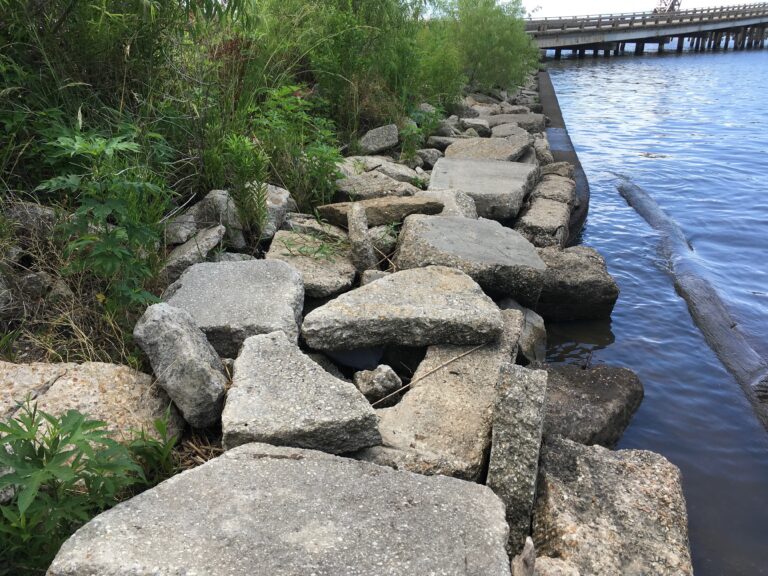
I sit next to the Mississippi River. Rebar sticks out of it
broken concrete and brick, which cements vast sections
of the bank. Derelict fishing nets add to the menace
It feels as though I am examining my life, or reading about it
looking at asphalt splits, watching grass force its way through
A towboat pushes a barge and churns, revealing the way
danger comes
The white people who see me here look startled and leave
So my heart hardens. All my horses and chariots
my horsemen, my army. All mingle with muddy water.
II. The Best Sleep
When my parents pulled our battered station wagon beside the levee, the sun was already gathering up its warmth and retreating behind a blue-green horizon. They slid ambassador reels through windows, lifted live bait from the back, and unwrapped rusted rod holders from dirty rags. I took a bucket in each hand and walked toward the river behind them.
I sat on a granite block watching my parents cast their lines. The reels whirred. Nylon arced. Sinkers plotted far out into muddy water — the surface gave way.
The sun sank deeper. A numbing wind smacked our faces. I blew heat into my hands. The wetland held tens of thousands of cypress branches worn smooth by waves. I gathered these to make a fire. By the time I finished, I had pulled together enough sticks and brush to house a family of beavers. My father made me pull some out.
Exhausted, I walked up the bank and through tall grass to the station wagon and grabbed old, torn blankets from the back.
Granite lay along the riverbank. I cleared sharp rocks from where I meant to sleep and flung them into shadows, then formed a wall of larger stones in the shape of an S.
Inside the fort, I placed the blanket, crawled in, rested my head on a stone, and pulled the other over me.
Across the river — a lone black ship pushing waves.
The fire.
The water lapping all night.
“My parents fishing. Talking low.”
III. Sound and Distance
A ship’s whistle carries across the water — distant.
Near, nearer.
Tire tracks cross the land. Oil rigs stand in the distance.
A great blue heron steps forward with quiet authority.

IV. Independence
Louisiana. Little Italy.
Hungarians. Strawberry fields.
The Good News Timber Company. Crapanzano Brothers Lumber.
My mother buying wood, selling pralines.
Guy’s Food Store — boxes of overripe bananas.
Railroad tracks beside La Carreta. Crawfish so spicy we cry. Our noses run.
We walk rows. Cut purple sugarcane. Strip it with knives and teeth.
Some of these images find their way into Let Them Fall.
I return to the river to see what
remains, and what changes.
Enter Bruce Elliot Alford’s Gulf South, where marsh light, backroad chapel, and storm-
haunted towns frame stories of grief, faith, and moral reckoning.